|
Report from Coronation Street
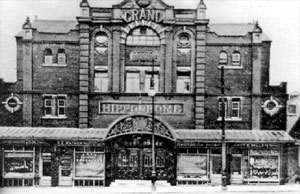
My relationship with Coronation Street began further back than the first episode that was broadcast from Granada Television in Manchester UK 44 years ago. In the 1940s our family was living nearby in Wigan and near enough the town centre for me to walk to the Hippodrome Theatre, which was occupied six months at a time by the "Frank H. Fortescue Players." My parents, keen theatre-goers, had introduced my sister and me to the local professional theatre when I was quite young. By the time I was ten years old, I went most weeks to the changing repertoire, a confirmed fan of the actors who just managed to present a new production each week through a torturous schedule of daily rehearsals and twice-nightly performances. The Hippodrome actors were spurred on by their director, Arthur Leslie, who often enough starred in his own productions as a middle-aged character man. His wife was the company's buxom leading lady. | |
| It must have been a hugely exhausting way to scrape a living together. Even as a kid I could tell that effort alone is not enough to put on a play, even the somewhat paltry thrillers, light comedies and farces which Arthur Leslie worked on week in week out. The pay was meagre and fame non-existent. Yet by the time Coronation Street had hooked its audiences, Arthur Leslie was perhaps the most easily recognised actor in the country. He had been chosen to play Jack Walker, husband of the redoubtable Annie, who together ran the Rover's Return Inn at the corner of Coronation and Rosamund Streets in Weatherfield, the fictional corner of central Manchester. It seemed a very dignified close to a hard-working career, the two-30minute-episodes-a-week schedule a relief after the regime at Wigan Hippodrome. |
| Arthur Leslie was one of a troupe of very accomplished actors from a variety of backgrounds, some semi-amateur or greatly inexperienced in television acting. Tony Warren's characters were so strongly written that they demanded an integrity and a Northern wit in the playing which soon became the hallmark of that first company of actors who initiated the longest-running continuous UK television story. In 2005 it plays on, now five times a week, and still in the cast are a few of the originals. Bill Roache, who has played Ken Barlow since the very first episode, survives with the indefatigable Eileen Derbyshire as Emily Bishop. |
|
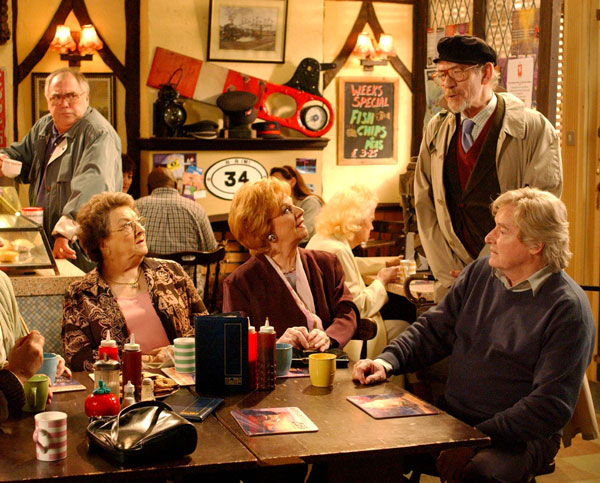
| On the last week in March, I went north for a reconnoitre accompanied by Tony Wood, Corrie's producer, who clearly loves the show as much as any of its viewers. Granada TV is in Quay Street close to the Opera House where I did some of my earliest posh theatre-going, seeing pre-London tours of new plays starring famous West End actors. Further up the street had been other theatres a hundred years ago, including the Gaiety, where Annie Horniman established the country's first repertory theatre (1908) with a semi-permanent company of actors in a regular programme of plays, including new ones about life as it was locally lived. The Manchester School of playwrights that introduced Stanley Houghton (Hindle Wakes) and Harold Brighouse (Hobson’s Choice) must be a continuing inspiration for their descendants who now write Coronation Street. One of these latter, Jonathan Harvey, was drafted to Weatherfield a year ago to oversee the newly-developed gay storylines. He gave me a call soon after my official offer from Tony Wood and was most encouraging that I would be well-looked after. |
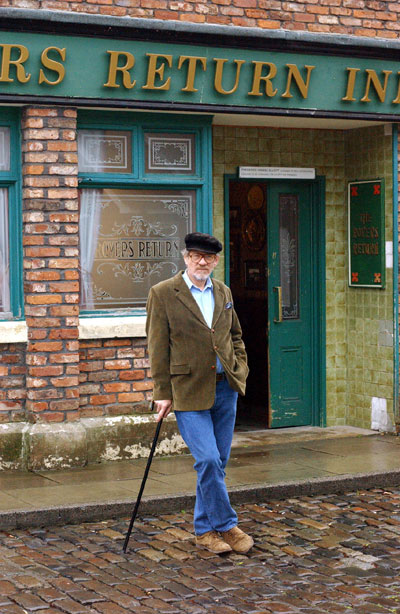
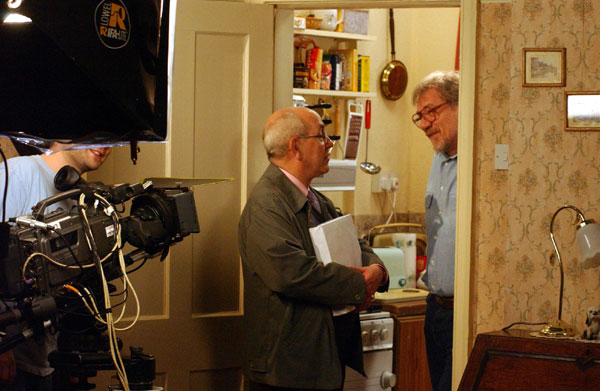
| So there I was sauntering alongside the familiar facade of Coronation Street, a backlot behind the Granada studio building. I found myself humming the show's signature tune, and experienced that sense of familiarity and belonging that Universal Studios and Disneyland play with when they beckon audiences through the screen into the actual world of ET or Indiana Jones or Peter Pan. There I was in the actual street, but behind the front doors, even of the Kabin and the Rover's Return, there is only just room for one person to squeeze. So in we went to the two studios where the interior sets stand cheek by jowl with only just enough space for the cameras and the crews that support them. It's the abiding image of the real Coronation Street — everything is smaller than you expect, including many of the actors, which is as well considering their off-set accommodation. | 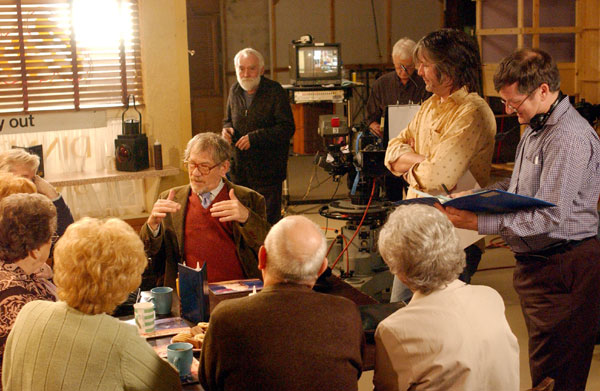 |
| Although some actors share, most have their own tiny dressing-room in a corridor decorated with large black and white photos of casts gone by. My room had just a clothes rail and an easy chair, a basin and small desk, and snuggled next door to John Savident's cell, below what I called "The Pat Phoenix Memorial Staircase." This linked the wardrobe department to the make-up room one floor up and was hung with four massive full-colour, fully-airbrushed pix of the late Ms Phoenix as the late Elsie Tanner, one of the Street's originals. I was humming that tune again and wondered if genuflection was in order. |
| As it is, everything backstage at Corrie is remarkably sane. Those heroic actors (one of whom is in the mid-80s) can be entombed without windows for twelve hours a day on a schedule (particularly when their character has a prominent storyline) that keeps them from their homes for months on end. Unable to take an evening off from line-learning — except for those occasional weeks when they are not in the show and kept on a retainer which is insufficient to pay the rent — they don’t complain, at least never to me. There is an air of contentment with things as they are, which comes down from the gentlemanly, phlegmatic William Roache and is adopted by the newcomers. They are all, without exception, friendly to outsiders, whether to fans whose correspondence is regularly attended in the greenroom ("Cast members only”) or to visiting actors like me. Their diligence is as evident as their talent and there isn’t one of them young or old that isn't perfectly up to the job. | 
|
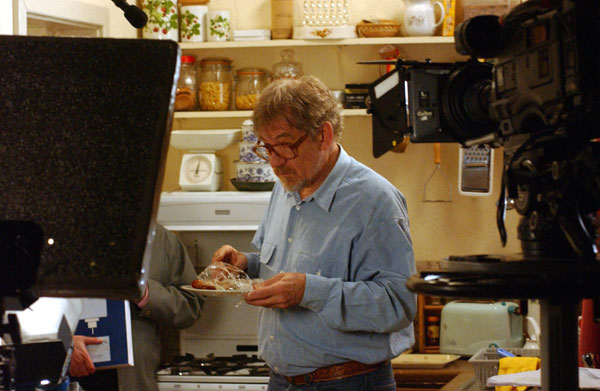
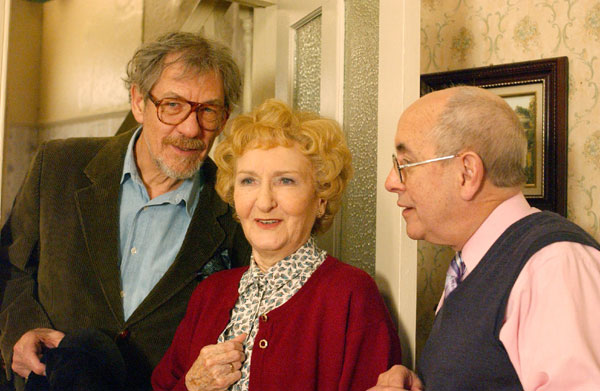
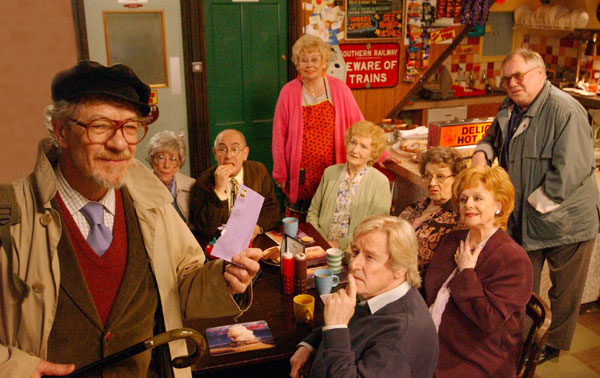
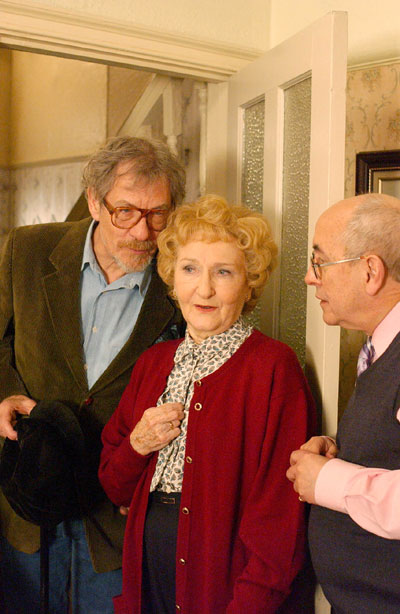
| Mel Hutchwright was written by the ten writers who wrote the ten episodes he appears in. These were spread over four weeks of recording. The consistency of their work is amazing, each episode dovetailing the next. I found learning without rehearsing difficult and didn't much enjoy having to make too many decisions on my own. Once your character is established the quickness of reading through a scene, blocking positions for actors and cameras and maybe a couple of takes before it's on to the next. Maybe this routine seems preferable to a longer process such as Peter Jackson's, for whom 25 takes is nothing. Again the regulars seemed content and sailed through each scene, though it was a relief that it wasn't me but another occupant of Emily Bishop's backroom who stumbled over their lines on my first day. |
| Often I felt a Pirandellian urge to laugh at it all. For instance, has Mel Hutchwright never watched television that he has to be introduced to characters who've been such a part of the nation's life for nearly half a century? It’s like working with a castful of twins. There's fluttery Emily who is a dead ringer for her creator Eileen Derbyshire. Ken Barlow looks just like the amiable Bill Roache. Have Rita and Barbara Knox ever been seen together? Of course they have, all the time! Then I began fantasies of Mel turning up in the Emmerdale bar once he's moved on from the Rover's . . . or even the bar of the Queen Vic. — Ian McKellen, 1 May 2005 |
|
More CorriePhotos of Ian McKellen by |
|